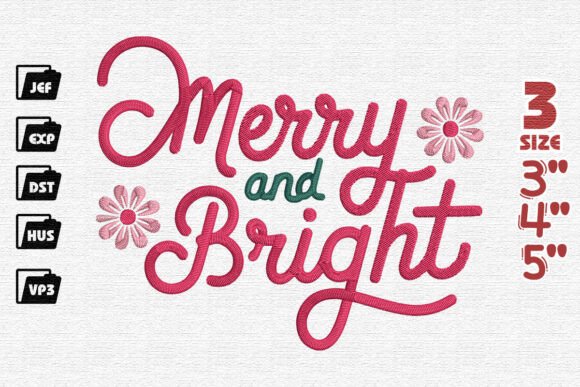
Merry Christmas Garland: A Business Design Review
As an experienced embroidery designer, I approach every machine embroidery design with a critical eye toward production viability and commercial application. When reviewing the Merry Christmas Garland file for small business merchandise, my primary focus shifts from simple holiday decoration to functional brand assets. This design features a classic greeting in bold, elegant red script atop a whimsical string of holly, but how does it translate to a busy café apron or a boutique tote bag? For shop owners and apparel decorators, understanding the technical and aesthetic limitations of this embroidery file is essential before committing to bulk production.
Visual Personality and Brand Alignment
The first impression of Merry Christmas Garland is undeniably warm and traditional. The bold red script suggests confidence and visibility, which are crucial for retail environments where staff needs to be easily identifiable. However, the "whimsical" nature of the holly garland element introduces a softer, handmade aesthetic. This duality makes the design particularly suitable for businesses that want to balance professionalism with approachability.
For a local bakery or florist, this visual tone reinforces a brand identity rooted in craftsmanship and community. It feels less corporate and more artisanal. Conversely, for a high-end luxury retailer, the playful holly might need to be evaluated against your existing design assets to ensure it doesn't clash with a minimalist logo. The elegance of the script lifts the design above generic clip art, making it appropriate for custom apparel that customers will actually want to wear or keep as a souvenir.
Commercial Applications for Small Business Merch
When integrating Merry Christmas Garland into small business merch, versatility is key. Based on the description of bold script and decorative elements, here is how this design performs across various commercial products:
- Apron Embroidery: This is likely the strongest use case. The horizontal orientation of a garland typically fits well across the chest or bib of an apron. The bold red thread provides excellent contrast against standard black, denim, or canvas aprons, ensuring staff are visible during the holiday rush.
- Tote Bag Design: As a seasonal add-on product, this design works beautifully on natural cotton totes. The whimsical holly appeals to shoppers looking for reusable holiday gift bags. Ensure the design is centered and sized appropriately so it doesn't get lost in the fabric texture.
- Embroidered Patch: Creating a standalone patch allows for inventory flexibility. You can stock patches and apply them to hats, sleeves, or jackets as needed. However, because this design includes script text, you must verify legibility at smaller patch sizes.
- Staff Uniforms: For work shirts or polos, placement matters. This design may be too wide for a standard left-chest logo position if scaled down significantly. Consider using it as a sleeve detail or yoke accent instead to maintain stitch integrity.
- Customer Gifts: Branded napkins, tea towels, or ornament blanks featuring Merry Christmas Garland serve as high-value touchpoints. These items extend your commercial embroidery efforts beyond revenue generation into customer retention and loyalty.
Technical Considerations and Production Risks
While the aesthetic is charming, the technical execution requires careful planning. Script fonts and detailed botanical elements like holly present specific challenges in machine embroidery design. Before running a full production batch, consider these potential pitfalls:
Stitch Density and Fabric Texture
Bold script often utilizes satin stitches, which can become dense. If you are embroidering on textured fabrics like fleece, terry cloth, or heavy canvas, the stitches may sink into the material, reducing visibility. Always test stitch density settings. You may need to add an underlay or increase spacing to prevent puckering. For apron embroidery on lightweight poly-cotton blends, excessive density could cause tearing; verify your stabilizer choice matches the fabric weight.
Cap Embroidery Challenges
Using Merry Christmas Garland for cap embroidery requires scrutiny. Caps have curved surfaces and limited vertical space. A horizontal garland design may distort when wrapped around the crown. Additionally, if the script letters are connected, they may not digitize cleanly for the tight radius of a cap frame. Always run a sew-out on an actual cap structure, not just flat fabric, before approving this for headwear.
Small Scale Legibility
The product description mentions "bold" script, which is promising, but "elegant" often implies thinner serifs or flourishes. When resizing this digital embroidery file for small patches or sleeve cuffs, those elegant details can turn into thread nests. There is a minimum size threshold for script text; going below it risks illegibility. If you intend to use this design at multiple sizes, confirm whether the file includes specific small-size variations or if manual editing is required.
Impact on Professionalism and Customer Trust
In the handmade and small business sector, the quality of your finished product directly correlates to perceived value. A poorly executed embroidery job—whether due to poor digitizing, wrong stabilizer, or inappropriate sizing—signals carelessness. Conversely, a crisp, vibrant rendition of Merry Christmas Garland enhances trust.
When customers see sharp lettering and clean satin edges on a handmade product, they assume the same attention to detail applies to your coffee, flowers, or baked goods. Visual consistency across your merchandise builds recognition. If this garland design aligns with your other branding elements, it strengthens your overall market presence. However, if the red thread clashes with your brand colors or the style feels disjointed from your logo, it can create cognitive dissonance. Always view this design alongside your core branding to ensure cohesion.
Designer Notes: Pre-Production Checklist
To ensure success with Merry Christmas Garland, follow this professional workflow before offering it to clients or selling it in your shop:
- Verify Licensing: Confirm the embroidery file includes commercial licensing for merchandise. Personal use licenses do not cover selling branded totes or staff uniforms.
- Create a Printable Mockup: Before stitching, place a digital mockup on photos of your actual products. This helps visualize scale and placement without wasting materials.
- Test Thread Colors: The description specifies "bold, elegant red," but red varies wildly between brands. Test different thread colors against your specific garment colors. A bright cherry red reads differently than a deep burgundy.
- Check Hoop Size Compatibility: Garlands are often wide. Measure the design dimensions and compare them to your available hoops. Avoid re-hooping for a single design whenever possible to maintain registration.
- Run a Black and White Test: Print the design outline in black and white to check spacing and negative space. Color can sometimes mask poor spacing in script fonts.
- Validate Stabilizer Choice: Match your stabilizer to the end-use. Washable items like aprons need cut-away backing for durability, while decorative ornaments might suffice with tear-away.
- Inspect After Washing: If this is for custom apparel that will be laundered frequently, wash your test sample. Check for shrinkage, thread bleed, or puckering that only appears after cleaning.
Merry Christmas Garland offers significant potential for festive small business merch, provided it is treated as a production asset rather than just a seasonal graphic. By respecting the technical requirements of script and botanical elements, and by testing thoroughly on your intended substrates, you can transform this cheerful design into a profitable, professional addition to your holiday product lineup. Always prioritize the integrity of the stitch and the clarity of the message to ensure your branded merchandise reflects the quality your customers expect.