Walking in a Winter Wonderland Design Review
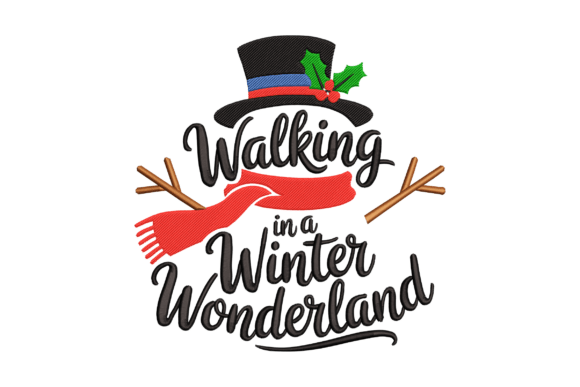
As an experienced embroidery designer evaluating assets for commercial production, my first impression of Walking in a Winter Wonderland is that it strikes a necessary balance between nostalgic charm and professional clarity. For small business owners and apparel decorators, this distinction is critical. While the description highlights the magic of the holiday season and the joy of a classic Christmas song, the true value of this machine embroidery design lies in its versatility as a branding tool. It does not feel overly juvenile or strictly decorative; instead, it presents a refined, festive aesthetic suitable for boutique merchandise, café uniforms, and handmade product labels. The visual personality suggests a design that can transition from a standalone holiday feature to a cohesive element of brand identity when paired correctly with business logos.
Evaluating Commercial Viability for Small Business Merch
When reviewing Walking in a Winter Wonderland for real-world application, I assess how the digitizing holds up across various custom apparel and accessories. For a local bakery or florist, this design serves as an excellent seasonal accent on staff uniforms without compromising professionalism. On aprons, the design provides a warm, welcoming focal point that enhances the customer experience during the holidays. The stitch structure appears robust enough for apron embroidery, where durability against washing and wear is paramount.
For Etsy sellers and creative studios, this embroidery file offers significant potential for limited-edition winter collections. As a tote bag design, it creates an immediate emotional connection with buyers looking for festive, reusable shopping bags. In the context of small business merch, the design works exceptionally well as an embroidered patch. Patches allow businesses to add seasonal flair to existing inventory without permanently altering garments, making this a cost-effective strategy for pop-up shops and holiday markets. Furthermore, for businesses offering corporate gifts or client appreciation tokens, this design elevates simple items like beanies or scarves into premium handmade products that reflect thoughtfulness and quality.
Critical Placement and Fabric Considerations
Despite its versatility, Walking in a Winter Wonderland requires careful placement strategies to ensure production success. Not every surface is ideal for intricate holiday motifs. When considering cap embroidery, specifically on structured fronts, the curvature can distort detailed elements if the design has not been digitized with cap-specific compensation. I recommend testing this design on a flat brim or unstructured dad hat before committing to bulk production on curved visors.
Fabric texture plays a massive role in the final outcome of this digital embroidery file. On high-pile fabrics like fleece or terry cloth, fine details may get lost unless a heavy topping stabilizer is used. Conversely, on tightly woven performance shirts often used for staff uniforms, stitch density must be monitored to prevent puckering or fabric damage. If the design includes delicate snowflake accents or script lettering, these areas are vulnerable on textured surfaces. For dark uniforms, ensure the thread colors provide sufficient contrast; white thread on navy is classic, but metallic threads on black may require additional underlay to prevent sinking and maintain sheen.
Size reduction is another area requiring caution. While the design captures the magic of winter, shrinking it below its intended minimum size for tiny sleeve cuffs or collar tags can result in thread breaks and illegible details. Always verify the minimum scalable size within your embroidery software before resizing for small-format applications.
Impact on Brand Perception and Customer Trust
Incorporating Walking in a Winter Wonderland into your product lineup is more than a seasonal decoration; it is a strategic move that influences buyer engagement. High-quality commercial embroidery signals attention to detail. When customers see crisp, clean stitching on a branded item, it reinforces trust in the business’s overall quality standards. A poorly executed holiday design can make a brand look amateurish, but a professionally reviewed and tested design like this one enhances perceived value.
Visual consistency is key. This design should complement, not compete with, your primary logo. For a pet brand or children’s boutique, the playful nature of the design aligns perfectly with existing brand voice. For more formal businesses, using this design as a subtle liner pattern inside a jacket or as a discrete tag adds a layer of sophistication. By integrating this design asset thoughtfully, businesses create a cohesive seasonal narrative that encourages social media sharing and repeat purchases. The emotional resonance of "walking in a winter wonderland" taps into positive memories, making the finished product feel personal rather than transactional.
Professional Designer Notes for Production Success
Before running Walking in a Winter Wonderland on live merchandise, adhere to these professional protocols to minimize waste and maximize quality:
- Verify Specifications: Since exact stitch counts, hoop sizes, and license terms are not explicitly listed in the product brief, you must confirm these details in your software before production. Ensure your commercial license covers the intended volume of sales.
- Test in Monochrome: Run a test stitch-out in black and white first. This reveals structural issues, registration errors, or density problems that color changes might hide.
- Stabilizer Selection: Match your stabilizer to the specific garment weight. Use cut-away for knits and stretch fabrics to maintain shape, and tear-away only for stable, non-stretch wovens.
- Create Printable Mockups: Before physical sampling, generate a printable mockup to visualize scale and placement relative to seams, pockets, and zippers. Share this with clients for approval to manage expectations.
- Thread Contrast Check: Evaluate thread colors under both natural and artificial lighting. Holiday displays often use warm lighting that can alter how metallics and whites appear compared to daylight.
- Hoop Size Confirmation: Always use the smallest appropriate hoop size for the design to maximize fabric tension and reduce flagging, which causes misalignment.
- Compare Assets: Place this design beside your other seasonal assets to ensure stylistic consistency. Mixing vastly different art styles can dilute brand recognition.
- Wash Testing: If producing staff uniforms or frequent-use tote bags, wash and dry the test sample three times to check for thread shrinkage, color bleeding, or stabilizer residue.
By treating Walking in a Winter Wonderland as a professional production asset rather than just a festive graphic, small businesses can leverage its charm to drive sales and strengthen customer relationships. Proper evaluation, testing, and strategic placement transform this delightful design into a powerful tool for seasonal merchandising success.